
The One Threat That Gives No Warning
Drought develops over weeks. Frost comes with a forecast. Insects build over a season. Hail arrives in fifteen minutes and leaves a commercial harvest unmarketable in the same time.
A single moderate hail event on an apple, pear, cherry, or grape crop at or near harvest can downgrade 100% of the fresh market crop to processing grade — a price reduction of 60 to 80 percent on the entire season’s investment. For premium fruit production targeting fresh market and export channels, there is no recovery within the same season.
Hail nets are the only commercially practical intervention that prevents this outcome at the crop level.
➤ Knitted HDPE Hail Net
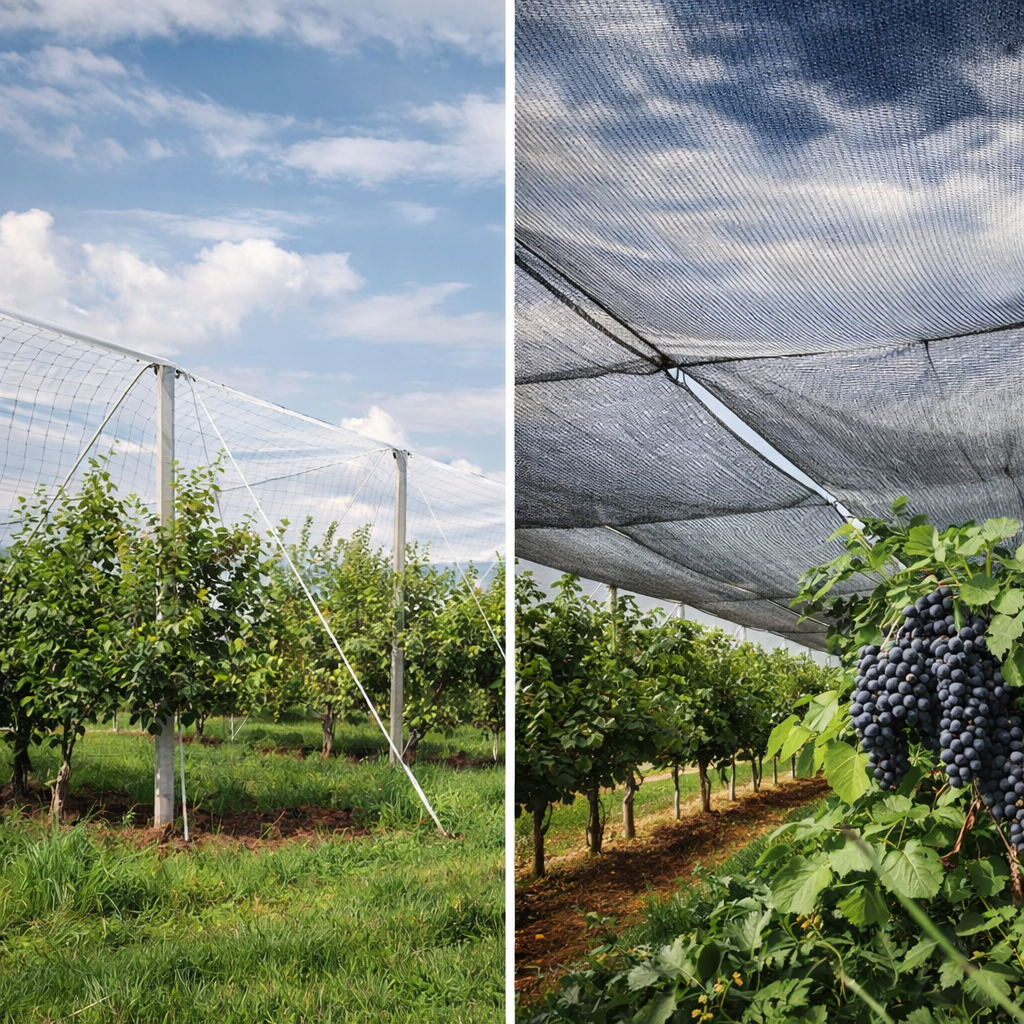
Hail nets are knitted from high-tenacity HDPE yarns engineered to absorb and distribute hailstone impact energy across the net structure rather than transmitting it to the fruit below. The net deflects slightly under impact — absorbing kinetic energy in the knitted yarn — then returns to its geometry. The fruit receives a fraction of the impact that direct exposure delivers.
Hail nets are installed on permanent overhead cable systems above the crop canopy. The installation is a capital investment evaluated against the historical hail risk at the site, the crop value, and the insurance cost alternative. In high-risk hail zones producing premium fresh-market fruit, payback is typically measured in one to three seasons.
Construction: Knitted high-tenacity HDPE Shade Impact: 8% – 15% light reduction — engineered for minimum shading Colours: White · Transparent (minimum shading) · Black UV Rating: 8-year · 10-year · 12-year Width: Custom — to row spacing and structure specification Length: Custom roll or cut panel Custom Sizes: Yes Best For: Apples, pears, cherries, grapes, stone fruit — premium fresh-market fruit crops in high hail-risk regions
➤ Hail + Shade Combination Net
Combination nets provide hail protection and a defined shade percentage simultaneously — specified where both hail risk and solar radiation intensity require management in the same installation.
Shade Percentage: 10% – 40% combined with hail protection Best For: Premium fruit in high-radiation, high hail-risk growing regions